Command An Army Maps Guide: Every Battlefield and Its Capture Points
How Command An Army battlefields work: attack-and-defend objective flow, lettered capture points, 12-player matches — and the honest state of the official map list.
FAQ
How many maps are in Command An Army?
What do the battlefields look like?
How many players share a map?
Do maps favor attackers or defenders?
Ask what map you’re on in Command An Army and the honest answer is layered: the system every battlefield runs on is thoroughly documented — attack versus defense, lettered capture points, twelve commanders per server — while the list of maps itself has never been officially published. This guide covers both: what is verified about the ground you fight on, in the game’s own screenshots and patch posts, and the explicit boundary of what is not.
How do Command An Army maps work?
Every battlefield runs the same objective structure, documented across the game’s own description and patch posts:
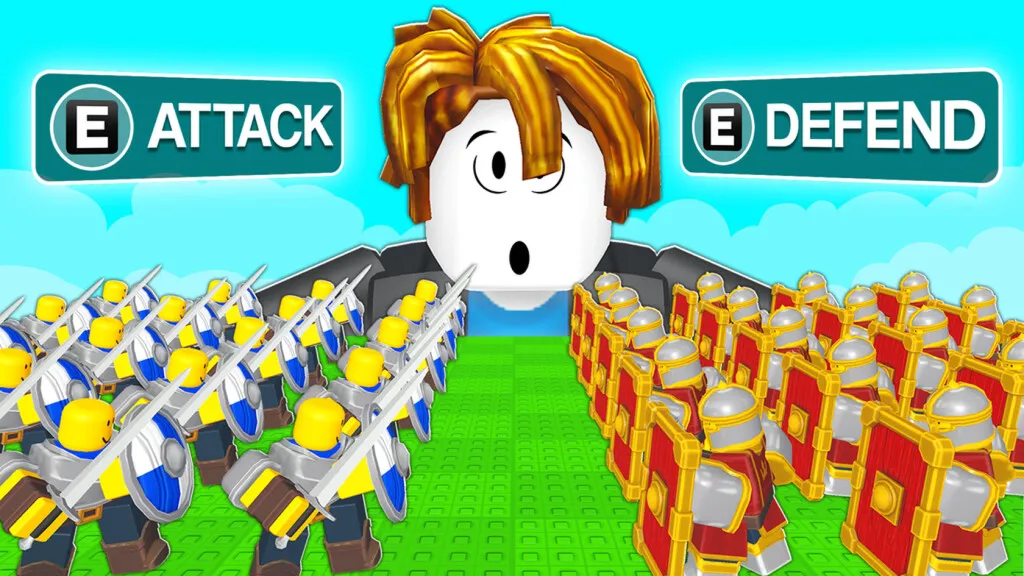
- Attack and defend. One team pushes toward the other’s objectives; the other keeps them off. The game’s own pitch line — “CHOOSE to either ATTACK or DEFEND” — is the whole mode in six words (attack vs defend).
- Lettered capture points, in sequence. Launch-week promo clips show captures identified by letters (a “Point B” features in the game’s own footage), consistent with a progressive layout: take one point, the line moves forward, the fight continues (how capture points work).
- Twelve commanders. The platform’s server-size figure for the game is 12 — two full armies of player commanders issuing formation orders over the same ground.
- Contested ground stalls. Progress on a point only banks while it is uncontested, which is why standing on a losing point is often the correct play while a flank forms.
What do the battlefields look like?
Two shapes are verified in the developer’s own store screenshots — the imagery below is first-party, pulled from the game’s official Roblox page:
The open field: two armies drawn up in facing lines across a road, shields front, spears raised, green ground between them. This is the battlefield of the classic meeting engagement — space for cavalry to work the flanks, long sightlines for ranged units (shorter ones since the September 13 range cut), and a clear front that moves as points fall.
The built-up push: attackers closing on a wooden fort — two towers, a double gate, red-shield defenders waiting on the dirt forecourt. This is the siege shape: approach lanes narrow to the fortification, the frontline earns its slot at the gate, and the capture point waits inside the hard ground.
How does map shape change your plan?
The objective system is constant; the ground is the variable. Three shape-driven adjustments, built on the documented mechanics:
- Open ground rewards the approach classes. Cavalry wins the space before the point fight; the wider the field, the more that matters. In cramped quarters its value drops — the game even ships a dismount order for mounted units in tight terrain (formations guide).
- Built-up ground rewards holders. Walls and lanes funnel attackers into predictable approaches. A shield line at the choke with ranged behind it is the documented answer; the September 13 range cut means that backline now sits closer to the wall than launch week.
- Both shapes punish off-point brawling. Whatever the map, capture progress banks only on uncontested ground — the kill count never appears in the win condition. The capture points guide covers the tempo habits that follow.
Why doesn’t this page list map names?
Because no first-party source has published any. Community nicknames for maps circulate in videos and posts, but this wiki’s standard is strict: a name lands here the day an official channel — the game page, a patch post, the info channel — prints it. Publishing an unofficial list as fact is how wikis end up confidently wrong. The absence is documented, dated, and watched: UPDATE 2 went live September 19, 2026 and its patch post named no maps, so the watch moves to UPDATE 3 (“New Content Drop!”), scheduled September 26, 2026 — a content update is a natural moment for map documentation to arrive.
What changes when new maps rotate in?
Three things to re-verify, in order: whether the lettered-point structure holds, whether the server size stays twelve, and whether any patch post names the new ground. Each lands on this page with its date — the same day it verifies, per the patch history standard this site keeps.
Sources
- Official Roblox game page — store screenshots (the two battlefield shapes above) and the 12-player server size, verified September 16 and 19, 2026 (the open-field shot re-captured and byte-matched against the live store page on September 19)
- Official COMMAND AN ARMY Discord — #update-log, September 6, 2026 economy patch: capture speed +10% per extra attacking player
- Launch-week promo clips — the “Point B” capture that documents the lettered-point structure
Gallery
Next objectives
Keep Reading, Commander
Related Articles
guides
Command An Army Game Passes: Every Pass, Price, and Honest Verdict
Every Command An Army game pass listed with its Robux price and honest verdict — what each pass changes and which ones are actually worth it.
units
Crossbow in Command An Army: What the Official Patch Notes Reveal
Named in the September 13 patch notes but absent from every unit list — officially real, otherwise undocumented. Everything known so far.
units
Spartan in Command An Army: What the Official Patch Notes Reveal
Named in the September 21 patch notes with a real stat nerf — officially real, otherwise undocumented. Everything known so far about the Spartan.
Was this helpful?
Thanks for the feedback!