How We Rank Units — Tier List Methodology
Our Command An Army tier list is data-first and dated. This page explains the ranking criteria, the update cadence, and how the first evidence-graded list works.

FAQ
Why do some units have no tier yet?
What criteria will the tier list use?
How often will the tier list update?
Can I contribute to the rankings?
Search “Command An Army tier list” and you will already find pages full of confident letter grades. The game launched on September 5, 2026. Nobody has the match volume to back those grades — including us. This page publishes exactly how rankings are built here, so you can check our work against the live unit tier list.
Dated change (September 14, 2026): the first tier list page is live, one update earlier than the original “two weeks of matches” target — because Update 1 (September 12, see the patch notes) made roster tracking itself the urgent question. It ships under this contract’s rules: units graded only where cross-source consensus or documented mechanics exist, the five Update 1 arrivals listed as “watching” rather than guessed, every row carrying its evidence. Match-tested verdicts still land only when the evidence bar below is met.
What are the ranking criteria?
Five lenses, applied to every unit, weighted for the game’s actual win condition (capture points — not raw kills):
- Objective impact. Does this unit take, hold, or contest points better than the alternatives in its role? (The capture points guide defines the test conditions.)
- Survivability per role. Not raw tankiness — survivability relative to the job: a Ranged unit that survives a flank attempt by repositioning scores; a Heavy Shields line that folds scores badly against its own standard.
- Damage contribution. Output measured against what it hits: lines it breaks, pushes it deletes, pressure it applies to set defenses.
- Upgrade economy. How fast the unit ascends with realistic duplicate income, and what its evolution ceiling is. A unit that is strong at base and dead-end is ranked differently than a unit that climbs (see the rarity guide).
- Matchup record. Observed results against the common classes — the unit type overview defines the field. Anecdotes seed hypotheses; repeated observations confirm them.
Every placement will cite its evidence. Where evidence is thin, the entry says so — a B+ with a caveat is more useful than an invented S.
What is the update cadence?
After every balance patch. The developer is patching actively (a balance update and a bugfix both shipped in week one — the launch codes literally include BUGFIX and LEBALANCE), so any tier list with a shelf life longer than a patch is stale on arrival. Between patches, placements only move on accumulated evidence, and every change carries a date.
What will the tier vocabulary mean?
Defined in advance, so the first published list needs no decoding — and so you can hold us to these definitions:
| Tier | Meaning | Evidence bar |
|---|---|---|
| S | Warps the match when fielded; answered by itself | Repeated, match-level results across multiple commanders |
| A | Best-in-role; fits almost any four | Consistent role performance with documented matchups |
| B | Situationally excellent; needs the right support | Solid results in the right composition, visible weaknesses |
| C | Usable early or as Ascension fuel; outgrown later | Fills a role until better options come online |
A unit can move tiers for economy reasons alone — a balance patch, a duplicate-income shift, or a newly documented evolution chain can change a placement without the unit itself changing. Every move is dated and, where the cause is a patch, linked to it.
What will this tier list never do?
Three refusals, stated publicly so they are easy to audit:
- No invented rankings. The game shipped September 5, 2026 — week-one lobbies were not a meta, and confident letter grades built on vibes are how wikis burn reader trust. The September 14 list publishes only consensus-backed and fact-backed placements (original wording: “no launch-week rankings”; changed September 14, 2026, when the first evidence-graded list went live).
- No “secret OP” claims without a replay story. Every placement cites what was observed, where. “Trust me, it is broken” is not an observation.
- No rankings-for-hire. Nothing on this site is pay-for-placement. If that ever changes, this page says so first.
How can you contribute?
The rankings will be built from structured observations:
- Unit and stage (base, ascended count, mastery level — the upgrading guide defines the vocabulary)
- Matchup (what it faced, roughly)
- What happened on the point (held, broke, flanked, folded)
Send those through the contact page. The official Discord is the faster conversation, but written observations are what make it into ranked entries.
How does this page become the tier list?
The mechanics are deliberately boring: as structured observations accumulate, units cross their evidence bar, placements get drafted against the criteria above, and the ranked table publishes as its own page in this category — linked from here, dated, with a changelog. This methodology page then stays as the standing contract: every future tier list on this site is checkable against it, and when the criteria themselves need to change (they will, as the game adds systems), the change is dated here too.
The first evidence-graded list is live at unit tier list — graded rows where evidence exists, “watching” rows where it does not. Full match-tested verdicts across the roster land as observations clear the bar, re-ranked after every balance patch. Until then, the honest ranking is the one you build yourself from the role framework — which is exactly what the pages below are for.
What can you read in the meantime?
While the meta forms, the honest alternatives to a verdict are the pages that feed it: the unit tier list (evidence-graded, Update 1 roster included), army building (role-based composition that works regardless of meta), the unit type overview, and the beginner guide for your first hour. Match-tested placements publish the moment the evidence supports them — not a day before, and not a day later.
Gallery
Next objectives
Keep Reading, Commander
Related Articles
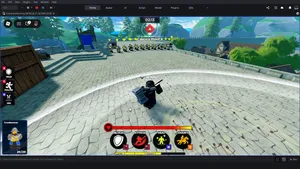
units
Crossbow in Command An Army: Official Record, Range Nerf, and First Evolution
Sneak-peek footage, a September 13 range nerf, and UPDATE 5's Crossbowman → Pavise Crossbowman evolution — the crossbow family finally has a documented path.
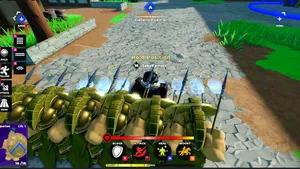
units
Spartan in Command An Army: Official Record and Patch Nerf
Shown in the developer's pre-launch sneak peeks, then nerfed in the September 21 patch — officially real, still roster-undocumented. Everything verified.
guides
Command An Army Summon Odds: Official Rates and Luck Explained
The only official summon rate in Command An Army — 4★ at 0.5%, 1% with Luck, 1.5% with Super Luck — translated into what your Gems actually buy.
Was this helpful?
Thanks for the feedback!